
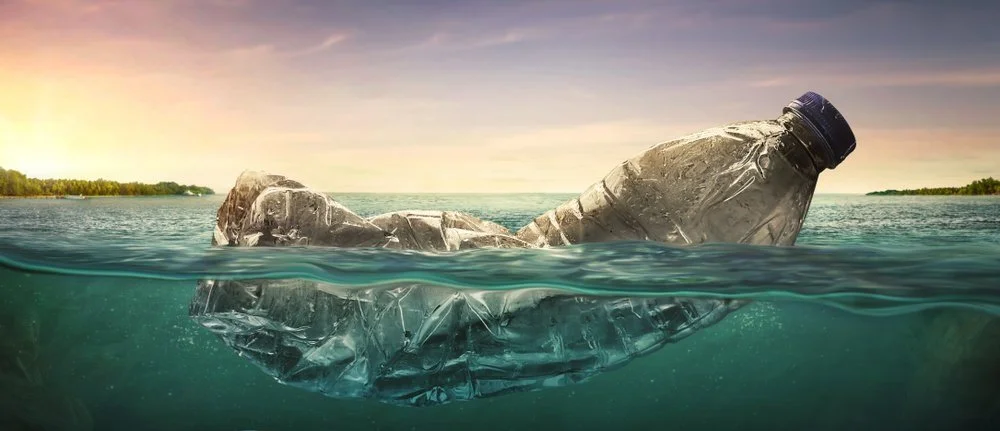
The Plastic Pollution Solution
“There is no such thing as ‘away’. When we throw anything away, it must go somewhere.”
You can find some kind of plastic in almost any product you buy in today's stores.
Production of plastic has increased 20-fold since 1964
and it is expected to double again in the next 20 years, and quadruple by 2050.
Polyvinyl chloride (PVC) is one of the most common plastics and is the main ingredient in most yoga mats that you can buy today. The process of creating a PVC yoga mat creates many harmful by-products, many of which are released into the environment. During the production of PVC, lead, cadmium and organotins are used to make it stable and phthalates are used to make it softer. Phthalates are one of the the world’s most common environmental pollutants, 95% of Phthalates are made for use in the production of flexible PVC.
"Phthalates is one of the world's most common environmental pollutants,
95% of Phthalates are used in the product of PVC"
After the PVC is produced and in use many of the harmful chemicals leach out of the product, during its useful life into humans, and into waterways and the environment after the product ends up in landfill.
Plastics have no place in the practice of yoga, and LovEarth is committed to making yoga plastic-free. Our LovEarth Yoga Mat is made from natural materials including jute and tree rubber and is fully biodegradable.
We are passionate about making yoga better for the earth. When you buy a LovEarth Yoga Mat, we will happily take your old mat and upcycle it in one of the great programs that we partner with. Find out more about our work here.
If you are replacing your LovEarth Yoga Mat with a new one, you can trade it in and receive a free YogaHive Pass. We will then take your mat and compost it on your behalf.
Come and LovEarth
with us!

FAQs
-
LovEarth yoga mats are made from ethically sourced natural tree rubber and jute. They are biodegradable and free from harmful plastics like PVC.
Go deeper with our full ingredients breakdown and all our certifications HERE -
When you purchase a new LovEarth yoga mat, you can send us your old mat for upcycling. We partner with various programs to repurpose old mats for use in shelters, prisons, rural yoga programs, and more.
-
Polygiene is a silver and salt-based treatment used in LovEarth mats to prevent odours. It is an ethical technology that helps keep your mat fresh without harmful chemicals.
-
Yes, LovEarth yoga mats are designed to be absolutely non-slip, providing a stable and secure surface for your practice.
-
You can choose to add a an organic cotton, adjustable carry bag for easy transportation to your LovEarth yoga mat order for an extra AU $10
-
LovEarth yoga mats are easy to clean. Simply wipe down with a damp cloth and mild soap, then air dry. Avoid using harsh chemicals or machine washing.
-
LovEarth yoga mats are made from natural, biodegradable materials and do not contain PVC or other harmful plastics. We also offer upcycling options to ensure old mats are repurposed sustainably.
-
Yes, LovEarth yoga mats are compostable. You can compost it yourself, or we can compost it for you when you trade it in for a new mat.
-
LovEarth is committed to eliminating plastic from yoga practice. Our mats are made from natural materials, and we encourage the recycling of old plastic mats through our upcycling programs. We aim to educate and promote sustainable practices in the yoga community.